How Heavy Should You Lift? Reps in Reserve Explained
You should lift heavy enough that each working set finishes with roughly 1 to 3 reps left in the tank, and light enough that every rep looks the same. That simple idea is called reps in reserve, or RIR, and it answers the question “how heavy should I lift?” better than any fixed percentage or number. It works for any exercise, any rep range and any level. Learning to judge it is one of the most useful skills in the gym, and our coaches at Dowe Dynamics can help you learn it in person.
What Reps in Reserve Means
Reps in reserve is the number of extra good reps you could have done at the end of a set.
- 0 RIR: you could not have done another clean rep. That is failure.
- 1 RIR: one more rep was possible.
- 2 RIR: two more were possible.
- 3 RIR: three more were possible.
- 4+ RIR: the set was fairly comfortable.
So if you do 10 reps and feel you had two more, that set was 2 RIR.
The beauty of RIR is that it adjusts to you. On a day you are tired, the same effort might mean a slightly lighter weight. On a strong day, a bit heavier. The effort stays right even when your strength changes day to day.
How Heavy Should I Lift for Muscle?
Research suggests muscle can be built across a wide range of reps, from roughly 5 to 30, as long as sets are taken reasonably close to failure. For most people, the practical sweet spot is:
- Reps: 6 to 15 per set
- Effort: about 1 to 3 reps in reserve on most working sets
- Sets: enough to train each muscle with around 10 or more hard sets a week, adjusted to your recovery
If you can do 20 reps with a weight you chose for 10, it is too light. If you can only manage 6 when you aimed for 10, it is too heavy. Our guide on strength vs hypertrophy training explains how rep ranges shift with your goal.
How Heavy Should I Lift for Strength?
Strength work usually uses heavier weights and fewer reps, often 3 to 6 per set. Because heavy compound lifts are more demanding and technique matters more, most strength sets are kept a little further from failure: around 2 to 3 RIR is common. Grinding out ugly reps on squats or deadlifts adds risk and fatigue without much extra benefit.
How Heavy Should Beginners Lift?
Beginners are not yet good at judging how many reps they have left. Most people underestimate it at first and stop sets far too early. A sensible approach:
- Start with a weight you can lift for your target reps with excellent form, around 3 to 4 RIR.
- Focus on controlled, consistent reps.
- Add weight as soon as the top of your rep range feels easy.
- Over the first few months, start pushing sets closer to 1 to 2 RIR as your technique becomes reliable.
How to Find the Right Weight on the Day
Use warm-up sets
Build up in two or three lighter sets. The last warm-up should feel quick and easy. This also tells you how you are feeling that day.
Do your first working set and rate it
At the end of the set, ask honestly: how many more clean reps could I have done? If the answer is 1 to 3, the weight is right. If it is 5, go up. If it was 0 and form broke down, go down.
Adjust the next set
Change the weight by a small amount, not a big jump. On machines, that might be one pin on the stack.
Write it down
Record the weight, reps and your RIR. Next time, aim to beat it with one more rep or a little more weight at the same effort.
Getting Better at Judging RIR
- Test it occasionally. On a safe exercise such as a machine or dumbbell isolation move, take a set to failure and see how close your guess was. Many people discover they had far more in the tank than they thought.
- Be careful with big free-weight lifts. Do not test failure on squats, bench press or deadlifts without a spotter or safeties.
- Watch your rep speed. When the bar or handle slows down noticeably, you are usually within 2 to 3 reps of failure.
For more on when going all the way to failure makes sense, see our guide to training to failure.
FAQs
Is lifting heavy better than lifting light?
Not by itself. Both heavier and lighter weights can build muscle when sets are hard enough. Heavier work is more specific to building maximal strength.
How do I know when to increase the weight?
When you hit the top of your rep range on all sets with 2 or more reps in reserve, it is time to add a little weight.
Should every set be close to failure?
Most working sets should be challenging, around 1 to 3 RIR. Warm-ups are easier. Occasional sets to failure on safer exercises are fine.
Is RIR the same as RPE?
They are closely linked. RPE, rate of perceived exertion, is often scored out of 10, where 10 means no reps left, 9 means one left, and so on.
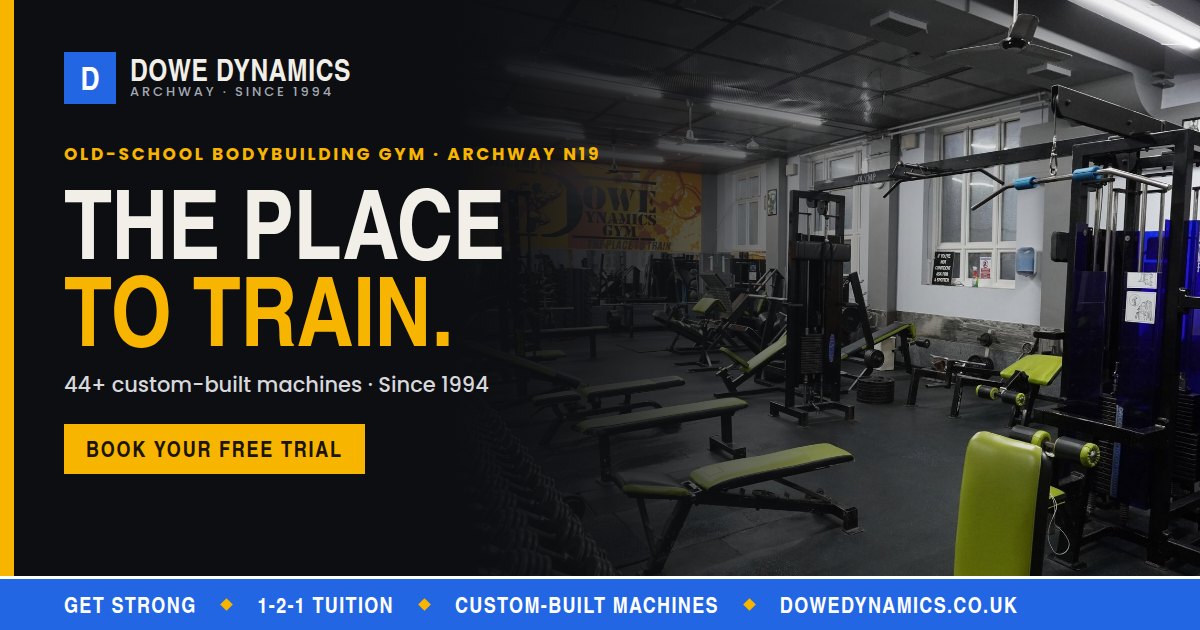
Lift the Right Weight With Coaching in Archway
Choosing the right weight is a skill that improves fastest with feedback. At Dowe Dynamics, by Archway station, our coaches offer personalised programmes as a separate PT service and can show you what 1 to 3 reps in reserve really feels like. Train on 44+ custom-built and Olymp machines with an Elite Membership, or book a free trial to start.

