Training to Failure: Should Every Set Be All-Out?
Walk past any gym and you will see two kinds of lifter. One stops every set the moment it gets uncomfortable. The other screams through every rep until the weight will not move. Neither is quite right. **Training to failure** is a powerful tool, but it works best when you use it on purpose, on the right exercises, at the right time. This guide explains how to judge effort with reps in reserve, when an all-out set earns its place, and why the machines on our floor in Archway, N19 make hard sets far more manageable.
## What training to failure actually means
Failure is the point in a set where you cannot complete another full rep with good form. Not the point where it starts to burn. Not the point where you get bored. The point where the weight stops, despite your best effort.
There are a few versions worth knowing:
- **Technical failure**: you could grind out another rep, but only by changing your form. This is where most sensible lifters stop.
- **Absolute failure**: the weight will not move at all, no matter what you do.
- **Beyond failure**: forced reps, drop sets and partials after you have already hit failure.
Most people who think they train to failure are actually stopping two or three reps short. That is not a criticism. It is useful information, and it brings us to the best way to measure effort.
## Reps in reserve: the simple way to judge effort
Reps in reserve, or RIR, is how many more good reps you could have done when you racked the weight. It is a quick, honest way to rate every set.
- **0 RIR**: nothing left. True failure.
- **1 RIR**: one more rep was possible, just.
- **2 RIR**: you had a couple left. Hard, but controlled.
- **3-4 RIR**: a solid working set, but clearly not maximal.
- **5+ RIR**: a warm-up or a technique set.
Most muscle building work sits happily in the 0 to 3 RIR zone. The closer you get to failure, the more each set asks of you, and the more recovery it demands.
### How to get better at judging RIR
Beginners are notoriously bad at guessing. Every few weeks, take the last set of one safe exercise all the way to failure and compare it with what you predicted. If you said "two left" and then got six more, you have learned something important about how hard you have really been training.
## Should every set be all-out?
For most people, no. Taking every set of every exercise to absolute failure tends to cause more problems than it solves:
- Fatigue builds quickly, so later sets and later exercises suffer.
- Recovery between sessions takes longer.
- Technique tends to slip on the last grinding reps.
- Motivation can drop when every session feels like a battle.
A smarter approach is to stay one to three reps short on most sets, then push closer to failure where it gives the most return for the least risk.
## When training to failure is useful
There are times when going all the way is genuinely worth it:
- **The last set of an exercise.** Earlier sets at 2 RIR, final set to failure. You get the stimulus without wrecking the rest of the session.
- **Isolation exercises.** A leg extension, preacher curl or standing leg curl taken to failure is low risk and very effective.
- **Calibration.** As above, to check your RIR guesses are honest.
- **Short, focused phases.** A few weeks of higher intensity before a planned [deload week](https://dowedynamics.co.uk/post/deload-week-explained) can work well for experienced lifters.
## When to stay away from failure
- Heavy compound lifts with free weights, where a failed rep can mean a dropped bar.
- When you are learning a new movement and your form is not yet automatic.
- When you are already tired, under-slept or run down.
- If you have a niggle or injury. Check with a GP or physio before pushing hard.
## Why machines make failure safer
This is one of the biggest advantages of a well-equipped machine floor. On a quality machine, the path is fixed and the weight cannot fall on you. When you hit failure, you simply stop and the stack lowers under control.
That means you can take a set on the Olymp chest press, horizontal leg press or seated lever row much closer to the limit without needing a spotter. You can focus entirely on effort instead of balance. It is also why many experienced bodybuilders save their hardest sets for machines and keep a rep or two in hand on free weights.
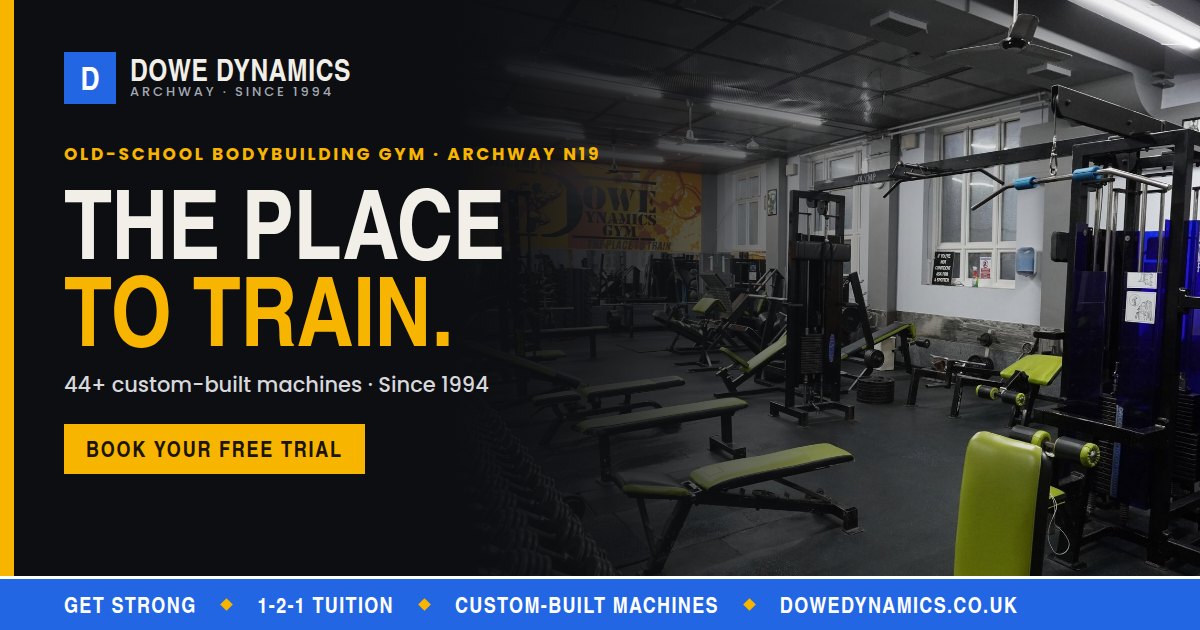
At Dowe Dynamics there are 44+ custom-built and classic Olymp machines, and with capped memberships there is no pressure to rush off a station mid-set. You can rest properly and give the next set everything.
## A simple way to put it together
Here is an example for one exercise, using the lat pulldown:
1. Two warm-up sets, well away from failure.
2. Working set one at around 3 RIR.
3. Working set two at around 2 RIR.
4. Final set to technical failure, then rack it.
Log the weight, reps and how close you were. Next time, aim to beat one of those numbers.
## FAQs
### Is training to failure necessary to build muscle?
No. Many people build plenty of muscle stopping one to three reps short of failure. Getting close matters more than reaching true failure on every set.
### What does RIR mean in the gym?
RIR stands for reps in reserve. It is the number of extra good reps you could have done at the end of a set.
### Is it safe to train to failure on machines?
Machines are generally a safer place to push hard, because the weight follows a fixed path and you can stop without dropping a bar. Good form still matters.
### How often should I train to failure?
A common approach is to take only the final set of an exercise to failure, mainly on isolation and machine movements, and keep the rest of your sets a rep or two short.
## Push hard, train smart
If you are not sure how hard you are really training, a coach can tell you in one session. Ian, Alberto and Artem can watch your sets and help you set the right effort for your goals. Meet [our coaches](https://dowedynamics.co.uk/gym-in-archway-dowe-dynamics-coaches), or book a free trial through [our membership page](https://dowedynamics.co.uk/gym-in-archway-dowe-dynamics-memberships) and train at our gym near Archway station.
Back to Blog
