Arm Workout on Machines: Bigger Biceps and Triceps
Bigger arms are near the top of almost every lifter’s wish list, yet arm training is often the sloppiest part of the week. Swinging dumbbells, half reps and random exercises at the end of a tiring session rarely build much. Arm workout machines take the guesswork and the cheating out of it. They lock your body into position so the biceps and triceps have nowhere to hide. Here is how to train arms properly on machines, how often to do it and how much volume you really need.
Know What You Are Training
Biceps
The biceps bend the elbow and turn the palm upwards. Underneath sits the brachialis, which adds thickness to the upper arm and responds well to neutral-grip curls. Train both and your arms look fuller from every angle.
Triceps
The triceps make up roughly two thirds of the upper arm, so if you want bigger arms, they deserve at least as much attention as the biceps. They have three heads, and the long head is best worked with your arms overhead or with pressing movements like dips.
Why Arm Workout Machines Work So Well
- No swinging. A fixed seat and arm pad remove the body English that turns curls into a full-body movement.
- Constant tension. Well-designed machines keep the muscle loaded through the whole range, including the top where dumbbells go light.
- Safe to push hard. You can take sets to failure, use drop sets and add pauses without worrying about control.
- Easy to track. Selecting a precise weight makes progressive overload simple.
The Arm Session
Rest 60 to 90 seconds between sets. Arms are small muscles and recover quickly within a session, so keep the pace up without rushing reps.
1. Olymp preacher curl: biceps
- Sets and reps: 4 sets of 8-12
- Tempo: 1 second up, 1 second squeeze, 3 seconds down
Adjust the seat so your armpits sit snugly over the top of the pad. Curl the handle up, squeeze the biceps hard at the top, then lower slowly until your arms are almost straight. Keep a slight bend at the bottom to protect the elbow and keep tension on the muscle. Do not lift your upper arms off the pad.
2. Tricep dip machine: triceps
- Sets and reps: 4 sets of 8-12
- Tempo: 1 second press, 2 seconds up
Sit tall with your torso upright, which keeps the focus on the triceps rather than the chest. Press down until your arms are straight and squeeze, then let the handles rise under control. Keep your elbows pointing back rather than flaring outwards.
3. Cable curl with a rope: brachialis and forearms
- Sets and reps: 3 sets of 12-15
Use a rope attachment with your palms facing each other, a hammer grip. Keep your elbows pinned to your sides and curl until your hands reach your shoulders. This builds the brachialis and forearms for thicker-looking arms.
4. Overhead cable tricep extension: long head
- Sets and reps: 3 sets of 12-15
Facing away from the cable with the rope behind your head, extend your arms forward and up until straight. The overhead position stretches the long head of the triceps, which many people find gives noticeable size on the back of the arm.
5. Superset finisher: pushdown and curl
- Sets and reps: 2 rounds of 15 each, no rest between exercises
Finish with cable pushdowns straight into cable curls. Light weight, strict form, a strong pump.
Frequency and Volume for Arms
Arms already get plenty of indirect work. Biceps help on every row and pulldown, and triceps help on every press. That is why direct arm volume does not need to be huge.
- Beginner (direct sets per muscle per week: 4-6, sessions: 1)
- Intermediate (direct sets per muscle per week: 6-10, sessions: 1-2)
- Experienced (direct sets per muscle per week: 10-14, sessions: 2)
Training arms twice a week with moderate volume often works better than one exhausting session. For example, add three or four sets of curls and tricep work at the end of your back day and your chest day, then run the full session above once a week.
Common Mistakes That Hold Arms Back
- Going too heavy. If your shoulders and back are moving, the load is too much for your arms.
- Cutting the range short. Half reps build half arms. Use a full, controlled range.
- Neglecting triceps. Most of your upper arm is triceps. Train them first sometimes.
- Training arms before big lifts. Tired arms weaken your rows and presses. Arms go last in a back or chest session.
- Forgetting to progress. Note your weights and reps and aim to beat them.
For more on how pulling and pressing build your arms indirectly, see our guide to a back workout on machines.
Arm Day in Archway
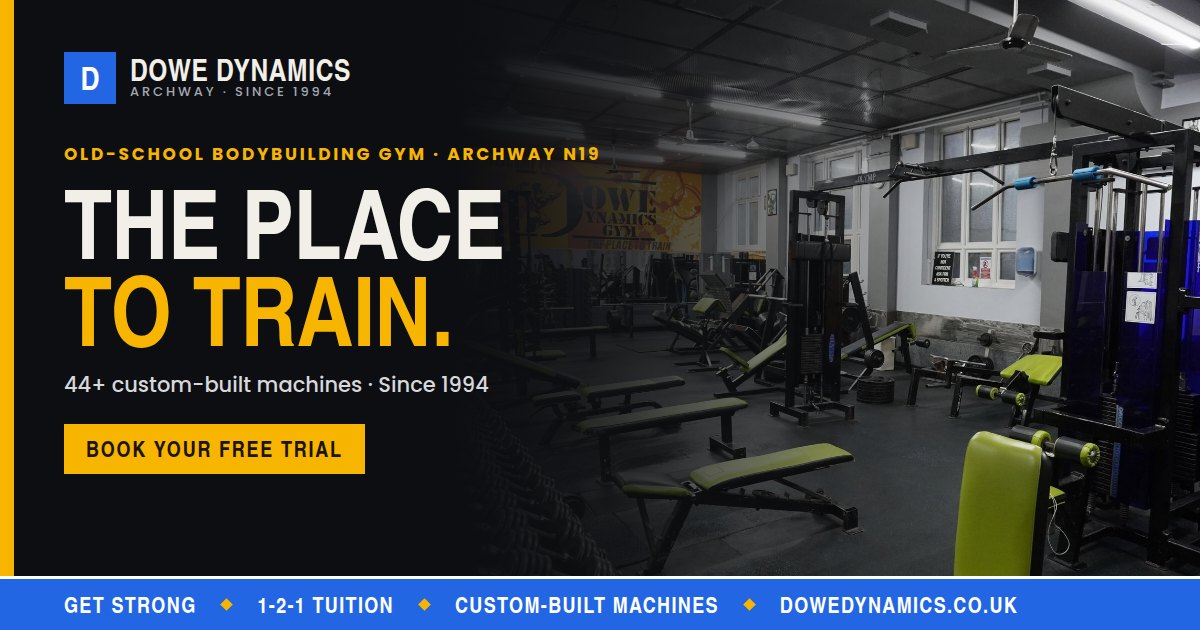
Dowe Dynamics has the Olymp preacher curl and a dedicated tricep dip machine, along with a floor of 44+ custom-built and classic Olymp machines. Because memberships are capped, you can run a superset without someone waiting on your station. The gym is at 2-4 Navigator Square, right by Archway station, a short trip from Tufnell Park, Crouch End and Kentish Town.
If your arms have stalled and you want a fresh plan, our coaches can build a programme around you.
FAQs
How often should I train arms to make them bigger?
Once or twice a week of direct arm work is enough for most people, alongside regular back and chest training.
Is the preacher curl machine good for biceps?
Yes. It locks your upper arm in place, stops swinging and keeps tension on the biceps, which makes it one of the best biceps exercises for growth.
Should I train biceps or triceps first?
Either works. Start with whichever is your weaker area, while you are freshest.
How many reps should I do for arms?
Most people do well with 8 to 15 reps per set, taken close to failure with full range and control.
Start Building Your Arms
Ready to put these arm workout machines to the test? Book a free trial, train on the Olymp preacher curl and dip machine and get a complimentary session with a coach. No pressure, no hard sell.

