Back Workout on Machines: Build a Wider, Thicker Back
The back is one of the hardest muscle groups to train well, simply because you cannot see it working. Plenty of people pull heavy weights for years and feel it mostly in their arms. A smart session using back workout machines changes that. Guided movement paths make it far easier to find the lats, mid-back and rear shoulders, so you can build both width and thickness. Below is a complete session, plus the cues that help you actually feel your back doing the work.
Width vs Thickness: Two Jobs for Your Back
A well-developed back has two qualities, and they come from slightly different movements.
- Width comes mainly from the lats, the large muscles running down the sides of your back. Vertical pulling, such as the lat pulldown, is the main builder. Wide lats create that classic V-taper.
- Thickness comes from the mid-back muscles: the rhomboids, middle traps and the lats working in a rowing pattern. Horizontal pulling, such as the seated row, builds this depth.
A complete back session includes both.
How to Actually Feel Your Lats
Learn these cues before the workout.
- Think elbows, not hands. Imagine your hands are just hooks. Drive your elbows down and back, and the lats take over from the biceps.
- Set your shoulders first. Before each rep, draw your shoulder blades slightly down, away from your ears. Shrugging up shifts the work to your upper traps.
- Use a looser grip. A death grip on the handle recruits more forearm and bicep. Hold firmly, but no tighter than you need.
- Pause at the contraction. Hold for one second when the handle is closest to your body and squeeze.
- Control the stretch. Let your arms go long on the way back and feel the lats lengthen. If you are jerking the weight, it is too heavy.
The Back Workout Machines Session
Rest 90 seconds to 2 minutes on the main lifts and around 60 to 90 seconds on the finishers. Take the last set of each exercise close to failure with clean form.
1. Olymp lat pulldown, wide grip: width
- Sets and reps: 4 sets of 8-12
- Tempo: lower over 3 seconds, pause 1 second at the bottom
Sit with your thighs secured under the pads and grip the bar slightly wider than shoulder-width. Lean back just a few degrees, then pull the bar towards your upper chest by driving your elbows down towards your hips. Squeeze, pause, and let the bar rise slowly until your arms are fully extended and you feel the stretch.
2. Seated lever row: thickness
- Sets and reps: 4 sets of 8-12
- Tempo: 1 second pull, 1 second squeeze, 3 seconds back
Set the chest pad so you can reach the handles with your arms fully extended. Keep your chest against the pad throughout. Row the handles towards your lower ribs, drawing your shoulder blades together at the end. Avoid rocking your torso to move the weight.
3. Olymp lat pulldown, close or neutral grip: lower lats
- Sets and reps: 3 sets of 10-12
Use a closer grip, or a neutral-grip attachment if available. This lets your elbows travel tight to your sides and puts a strong emphasis on the lower lats. Focus on pulling your elbows into your back pockets.
4. Single-arm seated lever row: balance and stretch
- Sets and reps: 3 sets of 10-12 each side
One side at a time helps you feel each lat and correct imbalances. Allow a little extra reach at the start of each rep for a deeper stretch, then row hard and squeeze.
5. Assisted pull-up on the lever power station: finisher
- Sets and reps: 2 sets to near failure
Finish with pull-ups, assisted if needed, with a full hang at the bottom of each rep.
Session Summary
- Lat pulldown, wide (sets x reps: 4 x 8-12, focus: Width)
- Seated lever row (sets x reps: 4 x 8-12, focus: Thickness)
- Lat pulldown, close grip (sets x reps: 3 x 10-12, focus: Lower lats)
- Single-arm lever row (sets x reps: 3 x 10-12 each, focus: Balance)
- Pull-ups (sets x reps: 2 x near failure, focus: Finisher)
Programming Your Back Training
- Frequency: train back once or twice a week. Twice works well if you split width and thickness across two days.
- Volume: around 10 to 16 hard sets a week suits most people.
- Progression: when you hit the top of the rep range on every set, add a little weight next time.
- Biceps: your arms will get plenty of work from pulling. Train them after back or on a separate day, not before.
If you have any back, neck or shoulder issues, check with a GP or physio before starting a new routine.
Proper Kit, No Queue
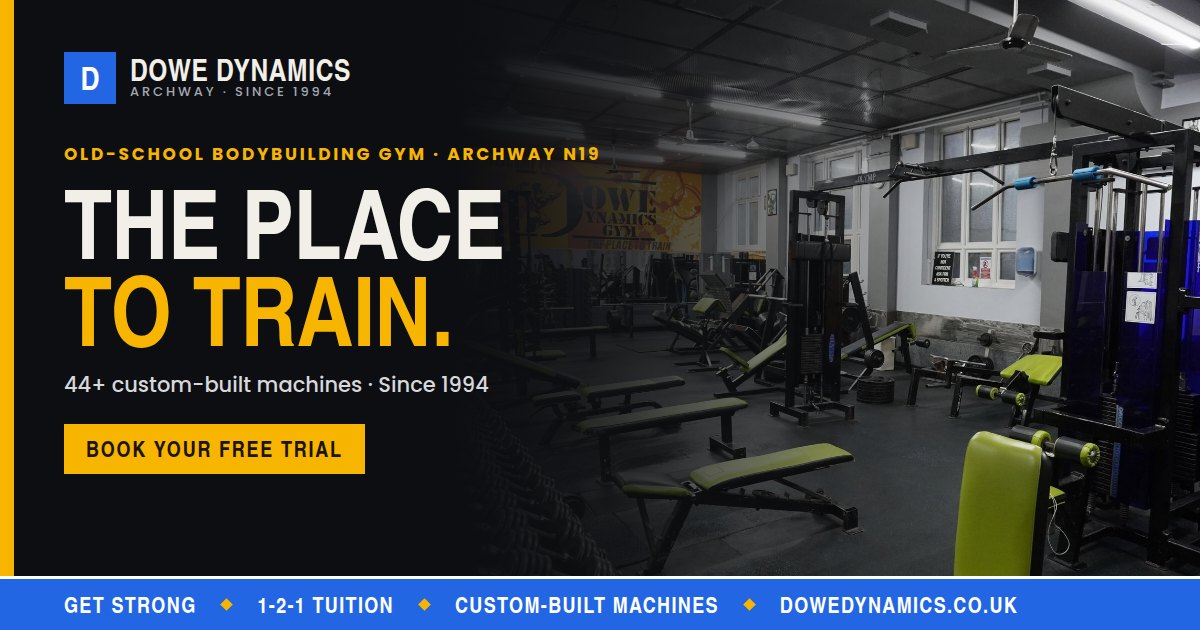
At Dowe Dynamics in Archway, the back workout machines include the Olymp lat pulldown, seated lever row and the lever power station, all part of a floor of 44+ custom-built and classic Olymp machines. Memberships are capped, so you can move between stations without waiting. We are at 2-4 Navigator Square, by Archway station, and easy to reach from Holloway, Kentish Town and Highgate.
Want to round out your upper body? Pair this session with our chest workout on machines. And if you would like a coach to check your form and cue you through every set, our coaches offer 1-2-1 personal training.
FAQs
Why do I feel lat pulldowns in my arms?
Usually because you are pulling with your hands rather than your elbows. Loosen your grip, set your shoulders down and think about driving your elbows to your hips.
Is the lat pulldown as good as pull-ups?
Both train the lats well. The pulldown lets you choose an exact load and control the movement, which makes it easier to progress for many people.
How many sets should I do for back?
Around 10 to 16 hard sets per week works for most lifters, split across one or two sessions.
Should I train back and biceps together?
Many people do, as biceps work during pulling anyway. Train back first while you are fresh, then add direct arm work.
Build Your Back in Archway
Ready to try these back workout machines for yourself? Book a free trial, train on the Olymp kit and get a complimentary session with a coach. No pressure, no hard sell.

