Lat Pulldown Form: How to Actually Feel Your Lats
The lat pulldown is one of the most popular machines in any gym, and one of the most misused. Plenty of people pull hundreds of reps a month and still feel it mostly in their arms, or not at all. If that sounds familiar, the problem is almost certainly your lat pulldown form, not the exercise itself. This is a technique deep-dive: how to grip the bar, where to put your torso, how to pull with your elbows and how to fix the mistakes that stop you feeling your lats.
What the Lats Actually Do
Your latissimus dorsi are the large, fan-shaped muscles running from your upper arm down to your lower back. Their main job is to pull the upper arm down and back towards your body. That is the key to the whole movement. The lats don’t bend your elbow, so if you think of a pulldown as “pulling with the hands”, your biceps will take over. Think instead of driving your elbows down to your sides.
Setting Up the Machine
A good rep starts before you touch the bar.
Thigh pad: Adjust it so your thighs are locked in snugly. If you lift off the seat as you pull, it is too high.
Seat position: Sit so your arms reach the bar comfortably at full stretch, with a slight lean back available.
Feet: Flat on the floor, giving you a stable base.
Our Olymp lat pulldown has a smooth, consistent pull, which makes it easy to focus on what your back is doing rather than fighting the machine.
Grip: Width and Hand Position
How Wide?
A grip slightly wider than shoulder width is the sweet spot for most people. Going extremely wide shortens the range of motion and often leaves the shoulders feeling cramped. Too narrow on a straight bar turns it into more of an arm exercise.
Thumbless or Full Grip?
Many lifters find a thumbless grip helps them feel their lats more, because you hook the bar rather than squeezing it with the forearms. A full grip is fine if it feels more secure.
Overhand vs Underhand
Overhand, slightly wide: the standard version, good for overall lat width.
Underhand, shoulder width: brings in more biceps, but many people feel a stronger stretch in the lower lats.
Neutral grip (palms facing): often the most comfortable for the shoulders.
Torso Angle
Sit upright and lean back slightly, around 10 to 20 degrees. This lets the bar travel in a clean line to your upper chest without hitting your face.
What you don’t want is a big lean back that turns the movement into a row, or swinging the torso back and forth to get the weight moving. Set your angle at the start and hold it for the whole set.
Lat Pulldown Form: Elbows Down
This is where most people go wrong, so take it step by step:
Start from a full stretch. Arms straight, let the bar pull your shoulders up slightly so you feel the lats lengthen.
Set the shoulders first. Before you bend your arms, draw your shoulder blades down, away from your ears. This tiny movement switches the lats on.
Drive the elbows down and in towards your back pockets. Your hands are just hooks.
Bring the bar to your upper chest, around collarbone level, with your chest lifted to meet it.
Squeeze for a second at the bottom.
Return slowly, taking two to three seconds, all the way back to a full stretch.
A good mental cue: imagine you are trying to put your elbows into your back pockets.
Common Lat Pulldown Form Mistakes
Pulling Behind the Neck
Pulling behind the head forces the shoulders into an awkward position and offers no real benefit for the lats. Always pull to the front.
Using Momentum
If you are rocking your body to move the weight, it is too heavy. Drop the load and own every rep.
Cutting the Stretch Short
Many people stop the bar halfway up on the way back, keeping the weight stacked. The stretched position is where a lot of the lat work happens. Let the arms go fully straight.
Shrugging Up
If your shoulders creep towards your ears as you pull, the traps are taking over. Set the shoulder blades down at the start of every rep.
Gripping Too Hard
A death grip fires up the forearms and biceps. Hold the bar firmly, but think about the elbows, not the hands.
Reps and Tempo
For most people, 3-4 sets of 8-12 reps works well. Use a controlled tempo: one to two seconds down, a one-second squeeze, two to three seconds up. If you can’t hold the squeeze at the bottom, lighten the weight.
Once your technique is solid, the lat pulldown fits into any back session. For how it works alongside rows and other back machines, see our guide to a back workout on machines for a wider, thicker back.
Train on Classic Olymp Iron in Archway
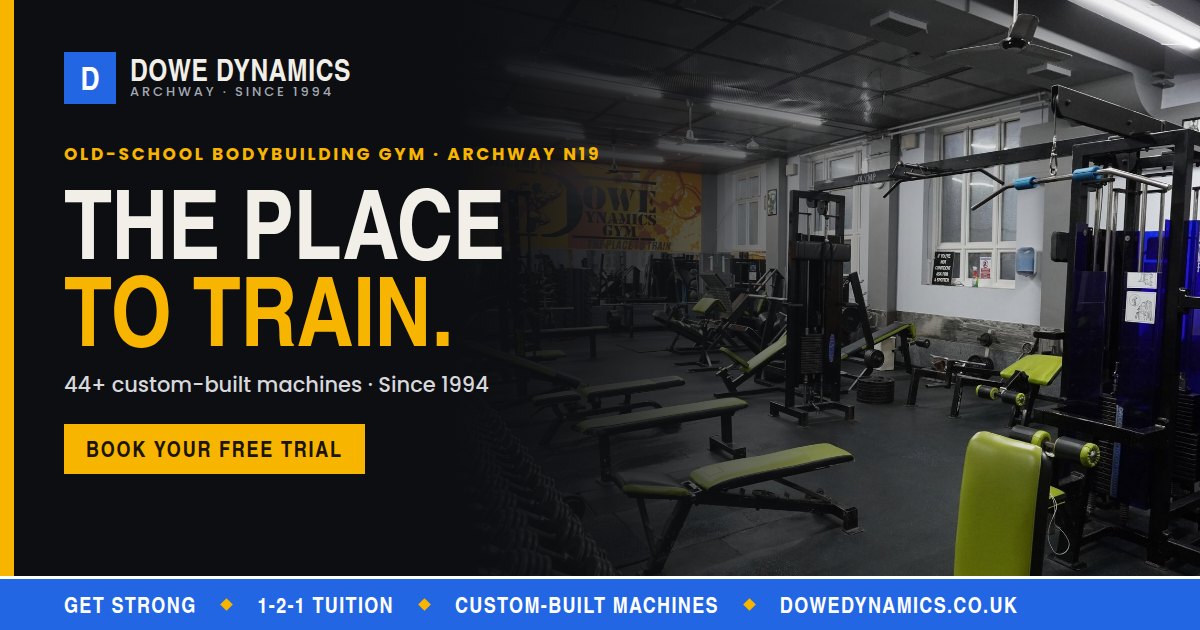
At Dowe Dynamics, our Olymp lat pulldown is a firm favourite with members. Memberships are capped, so you won’t be waiting in line or rushing your sets. We are at 2-4 Navigator Square, Archway, N19, a couple of minutes from Archway station and easy to reach from Highgate, Holloway, Tufnell Park and Islington.
FAQs
Where should the bar touch on a lat pulldown?
Bring the bar to your upper chest, around collarbone level. Lift your chest slightly to meet it rather than leaning way back.
Why do I feel lat pulldowns in my arms?
It usually means you are pulling with your hands instead of driving the elbows down. Set your shoulders first, use a looser grip and think about elbows to back pockets.
Is a wide grip better for lats?
A grip slightly wider than shoulders suits most people. Very wide grips shorten the range and don’t add much extra lat work.
How much should I lean back on a lat pulldown?
A slight lean of around 10 to 20 degrees is enough. Hold it steady throughout the set and avoid swinging.
Feel Your Lats for the First Time
The fastest way to nail lat pulldown form is to have someone watch you do it. Book a free trial at Dowe Dynamics and you can train at your own pace, or claim a complimentary PT session if you want a coach, with no pressure and no hard sell. Book your free trial on our membership page or call 020 7281 2267.

