Neck Training: The Old-School Habit Most Lifters Skip
Neck training means strengthening the muscles that move and support your head, using simple exercises such as resisted nods, side bends and holds. It was a regular part of old-school bodybuilding, wrestling and boxing gyms, and then quietly disappeared from most modern programmes. Done gently and progressed slowly, a few minutes a week can help build a stronger, more solid-looking neck. At Dowe Dynamics in Archway, it fits naturally into the classic, no-nonsense training we have been doing since 1994.
Why Old-School Lifters Trained the Neck
Look at photos from the golden era and a thick neck was part of the look. Bodybuilders, wrestlers and fighters all trained it. There were a few reasons:
- Proportion. A developed neck balances out big traps and shoulders. A skinny neck on a muscular frame can look out of place.
- Combat sport. In boxing and wrestling, a strong neck is part of how fighters brace against impact. Many boxing coaches still include neck work for that reason.
- Resilience. Like any muscle, the neck muscles can get stronger with training. Many people who sit at a desk all day find that some gentle strength work helps their neck feel less stiff.
Is Neck Training Safe?
It can be, if you respect a few rules. The neck is not the place for ego lifting.
- Start with no load or very light load. Your own hand as resistance is plenty at first.
- Move slowly. No jerking, bouncing or fast reps.
- Use a comfortable range. Never force the end of the range.
- Stop if anything feels sharp, causes tingling, numbness, dizziness or headaches.
If you have had a neck injury, have a known neck or spine condition, or get arm pain, pins and needles or numbness, speak to a GP or physio before starting.
Four Beginner Neck Exercises
1. Manual resistance nods (flexion)
Sit or stand tall. Place your palm on your forehead. Gently push your head forward into your hand while your hand resists, moving slowly through a small range. Do 2 sets of 10 to 15.
2. Manual resistance extensions
Clasp your hands behind your head. Slowly tip your head back against light resistance from your hands, then return to neutral. Do 2 sets of 10 to 15.
3. Side bends (lateral flexion)
Place one hand on the side of your head. Tilt your ear towards your shoulder against light resistance, then return. Do 2 sets of 10 to 15 each side.
4. Isometric holds
Push your head gently into your hand in each direction (forward, back and to each side) without moving, for 10 to 20 seconds. This is a good starting point if you are cautious.
Progressing Your Neck Training
Once the manual versions feel easy over several weeks, you can try lying versions on a flat bench:
- Lying neck flexion. Lie on your back with your head just off the end of the bench. Lower your head slowly and nod your chin towards your chest. Start with no weight. Later, a light plate on a folded towel on your forehead can add resistance.
- Lying neck extension. Lie face down with your head off the end. Lower your chin towards the floor, then lift your head back to level. Again, start with bodyweight only.
Some lifters use a neck harness. It is a classic tool, but only worth considering after months of consistent, lighter work, and best learned with a coach.
Add load in very small steps. With neck training, reps and control matter far more than weight.
How to Fit It Into Your Week
- 2 sessions a week is plenty.
- Add it at the end of a back, shoulder or trap session.
- Pick 2 to 3 exercises, 2 sets each of 10 to 20 slow reps.
It pairs well with shrugs and other upper back work. Our guide to old-school trap training covers that side. For the habits that keep lifters training for decades, including how to progress small muscle groups, see our article on avoiding injury in the gym.
Neck Training for Boxing
If you box, a stronger neck can help with how you hold your position in the ring. Alberto, our boxing coach with 20+ years of experience, can talk you through how neck work fits around pad sessions and conditioning. Find out more on our coaches page.
FAQs
How long does it take to build a bigger neck?
Like other muscles, it takes consistent training over months. Many people notice their neck feels stronger before it looks bigger.
Can neck training help with a stiff neck from sitting?
Many people find gentle strengthening and movement helps them feel less stiff. If your neck is painful rather than just stiff, see a GP or physio first.
Do I need special equipment?
No. Your hands and a flat bench are enough for months of progress. Equipment like a harness is optional and for later.
Should women train their neck?
Yes, if they want to. Neck strength is useful for anyone. Light, controlled work is the same for everyone.
Train the Old-School Way in Archway
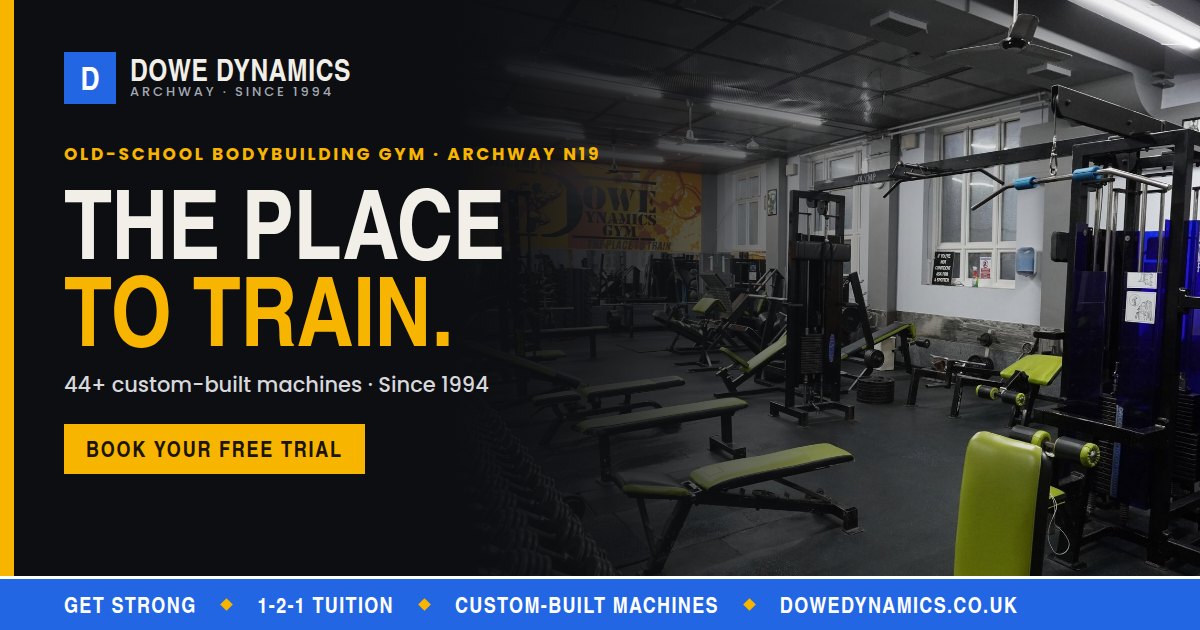
Neck training is one of those habits old-school gyms never dropped. Dowe Dynamics was opened by Ian Dowe, a world champion bodybuilder, in 1994, and it still has the poster walls, 44+ custom-built and Olymp machines and 90s bodybuilding atmosphere. Visit Dowe Dynamics by Archway station, book a free trial with a complimentary coached session, or see our Elite Membership at £45 a month.

