Home Workouts vs the Gym: What Really Builds Muscle?
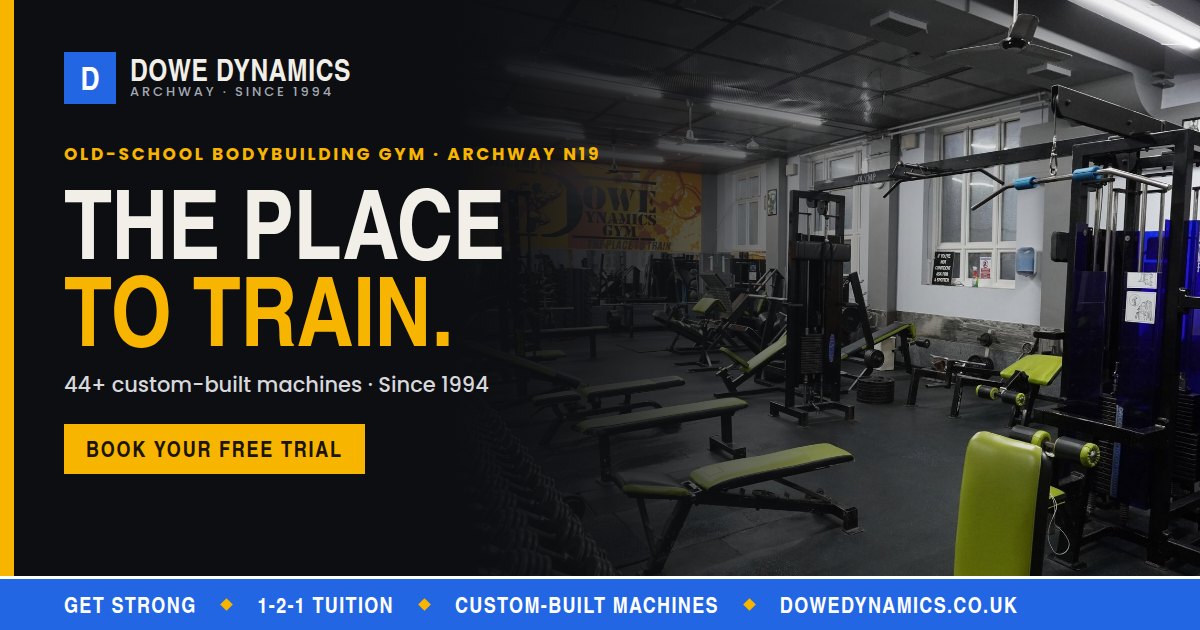
Both home workouts and the gym can build muscle, but they are not equal once you get past the beginner stage. Muscle grows when you train hard and keep adding challenge over months, and the gym simply makes that easier to do. If you are weighing up home workout vs gym for building muscle, the real question is how long your setup can keep you progressing. At Dowe Dynamics in Archway, a gym membership with 44+ machines solves that problem for good, but home training still has its place.
What muscle actually needs
Before comparing locations, it helps to be clear on what drives growth. Research suggests three things matter most:
Enough effort. Sets taken reasonably close to failure, where the last few reps are a real struggle.
Progression over time. More weight, more reps or better control as the weeks go on.
Consistency. Several sessions a week, repeated for months and years, not weeks.
Any setup that delivers all three will build muscle. The problem is that most home setups struggle with the second point sooner than people expect.
Home workout vs gym: where each one wins
Where home workouts do well
No travel. You can train in the time it would take to get to the gym.
Good for complete beginners. Press-ups, squats, lunges and rows with a band will challenge someone who has never trained.
Useful as a backup. A short home session on a busy day beats skipping training entirely.
Where the gym pulls ahead
Load you can keep increasing. Once 20 press-ups become easy, you need harder variations, a weighted vest, or more and more reps. On a chest press or a barbell, you just add a plate.
Every muscle, properly loaded. Legs, back and hamstrings are the hardest to train hard at home. Leg press, hack squat, leg curl, pulldown and row machines let you load them heavily without a spotter.
Small, measurable jumps. Selectorised stacks and plates let you move up in small steps, which keeps progress steady and visible.
A place that means training. Many people find it far easier to work hard in a room full of iron and other lifters than in a spare bedroom next to the laundry.
Why bodyweight training stalls for most people
Bodyweight exercises are fantastic for learning movement, but the resistance is fixed. Your upper body can stay challenged for a while with harder press-up and pull-up variations. Your legs usually cannot. Most healthy adults can do dozens of bodyweight squats, which turns leg training into endurance work rather than muscle building.
You can get around this with single-leg work, slow tempos and pauses, but there is a ceiling. Dumbbells help, yet adjustable sets get expensive as you get stronger, and they take up space in a London flat. That is the point where most people either stall or start looking for a gym.
What about a home gym?
A proper home gym with a rack, barbell, plates and an adjustable bench can absolutely build an impressive physique. The trade-offs are cost, space, and the lack of machines for isolation work like leg curls, pec deck or lateral raises. You also train alone, with no coach on hand to check your form or tell you when your programme needs changing.
If you already own that setup and use it consistently, keep going. If you are thinking of buying one, compare the cost against several years of a membership first.
How to decide which suits you
Ask yourself these questions honestly:
Have I trained for more than six months? If yes, home equipment is probably already limiting you.
Am I making progress in my training log? If the numbers have not moved for weeks, you need more load or a better plan. Our guide on how to track your workouts shows you how to spot a stall early.
Do I actually train at home? Many people buy kit and then skip sessions because home has too many distractions.
Do I feel nervous about gyms? That is common and very fixable. Read our tips on walking into the gym with confidence.
For most people who want visible muscle, the answer is a gym as the main base, with a short home session saved for weeks when life gets in the way.
Making the switch from home to gym
If you have been training at home, you are not starting from zero. Your press-ups translate well to the chest press, your band rows to the seated row, and your squats to the leg press. Start with moderate weights, focus on control, and add load slowly over the first few weeks.
At Dowe Dynamics, the free trial lets you train on the machines at your own pace, and you can claim a complimentary PT session if you want a coach who shows you how to set up and use the machines, so you are not left guessing about seat heights and pins. If you want more structure, our coaches offer personalised programmes as a separate paid PT service.
FAQs
Can you build muscle with home workouts only?
Yes, especially as a beginner. Over time, progress usually slows because bodyweight and light dumbbells cannot keep increasing the challenge, particularly for legs and back.
Is the gym worth it if I only go twice a week?
Two hard, well-planned sessions a week can build muscle for many people, provided each session trains the whole body with enough effort and you add weight over time.
Do I need free weights or are machines enough?
Machines are enough to build a lot of muscle. They let you load muscles safely and progress in small steps, and many lifters use a mix of both.
What should I do on weeks I can’t get to the gym?
Do a short home session with press-ups, split squats, band rows and planks. It keeps the habit going until you are back on the gym floor.
Train where progress is easier
If home workouts have taken you as far as they can, come and see what a room full of old-school iron can do. Our Elite Membership is £45 a month with limited spaces, and members can cancel with 30 days’ notice. Have a look at our membership options, then book your free trial at 2-4 Navigator Square, right by Archway station.

